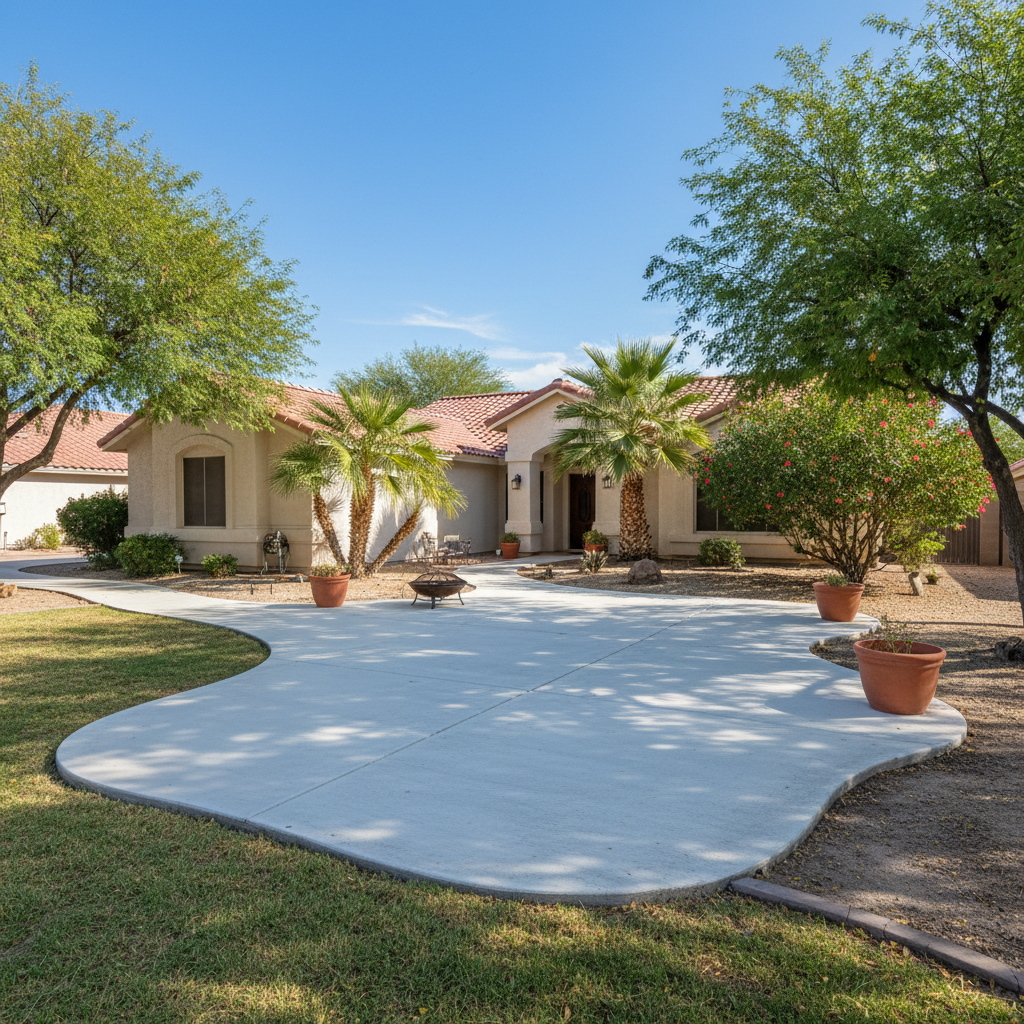
Ever poured a cup of coffee outside in July and watched it heat up in five minutes? That same brutal desert sun is doing a number on your home concrete slabs right now. If you live out near Coldwater Springs or down by Rancho Santa Fe, you already know our climate is very harsh. Concrete might look tough, but our extreme summer heat and bone-dry air create unique challenges for Concrete installation and long-term durability in Avondale, AZ.
Avondale Concrete Solutions wants to talk about what the weather actually means for your flatwork, concrete driveways, and concrete patios. When you are planning a new pour around here, timing is everything. We cannot just throw concrete down in the middle of a 115-degree afternoon and hope for the best. The water in the mix will evaporate too fast, leading to shrinkage cracks and a weak surface. That is why Avondale Concrete Solutions usually schedules big pours early in the morning during the summer months, or pushes projects into our fall and winter windows when the thermometer finally drops.
Beating the Heat During Concrete Installation
When the temperature climbs past 90 degrees, concrete starts setting up too fast, which leaves us little time to properly screed, float, and finish the surface. Avondale Concrete Solutions takes extra steps when the weather gets hostile. We might use chilled water in the truck mix, dampen the subgrade so it does not suck the moisture right out of your fresh pour, or apply evaporation retarders to keep things hydrated during Concrete installation in Avondale.
Curing is very important for Concrete. Everyone thinks concrete dries to get hard, but it actually cures through a chemical reaction that needs moisture. If you let it dry out too quickly in the Arizona wind and sun, you lose up to 50 percent of its structural strength. That means keeping the concrete wet for 3 to 7 days after it goes down.
Protecting Your Concrete Investment All Year Long
Once your new concrete patio or concrete driveway is cured, maintenance is still required. Our native caliche soil shifts and expands when we get a decent monsoon downpour, putting stress on your concrete slabs. Sealing your concrete every couple of years acts like sunscreen for your investment. It blocks out moisture, oil drips from the car, and harsh UV radiation across Avondale, AZ.
- Clean off stubborn debris and leaves before they stain the concrete surface.
- Reseal decorative concrete or stamped concrete every 2 to 3 years.
- Avoid using harsh chemical de-icers if we get an unusually freezing winter night.
Taking care of your concrete does not have to be a headache. Just keep an eye on hairline cracks, seal the concrete surface when it starts looking dry, and always plan your Concrete projects around our wild seasonal temperature swings in Avondale.