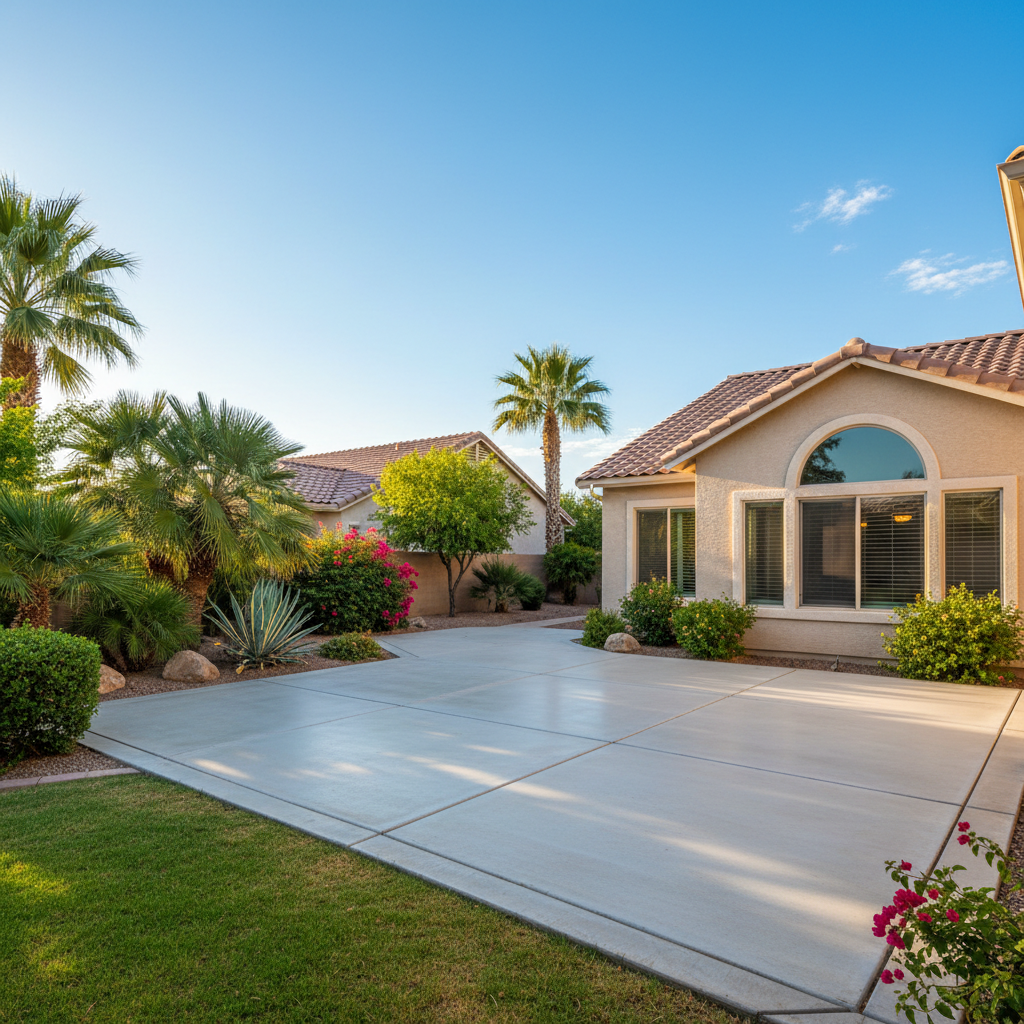
Anyone who touches a metal car door in an Avondale driveway in July knows that desert summer heat is very intense. That kind of high heat does a lot of damage to fresh concrete, and if a contractor does not time the pours correctly, the result is a cracked, crumbly mess instead of a solid slab.
Why Avondale Climate Changes Everything
Avondale Concrete Solutions deals with extreme dry air, triple-digit summer temperatures, and alkaline caliche soil that shifts when the area gets a monsoon downpour. When you pour concrete out here, water evaporates very fast. If the mix dries out before it cures, the concrete loses strength. That is why Avondale Concrete Solutions has to adjust construction schedules and mix designs depending on what month it is.
Winter is actually prime time for concrete work around here. Mild days in the sixties and seventies let the cement hydrate properly without needing constant soaking or retarders. But homeowners always want backyard upgrades right when spring hits, so you have to plan ahead.
Scheduling Your Project Across the Seasons
- Fall and Winter: Ideal conditions for flatwork, patios, and driveways with minimal weather stress.
- Spring: Great weather, but you have to watch out for sudden desert wind gusts that dry out the surface prematurely.
- Summer: Early morning pours only, sometimes starting before the sun comes up, followed by aggressive curing and sealing to lock in moisture.
Protecting Your Investment Year-Round
Once Avondale Concrete Solutions lays down that new pad, the work is not quite over yet. You have to seal it. Down here in the Valley, a good penetrating sealer acts as a shield against stubborn oil leaks, pool chemicals, and that harsh UV radiation beating down day after day. Reapply it every couple of years, keep it swept clean, and your concrete will easily outlast the next few heatwaves.