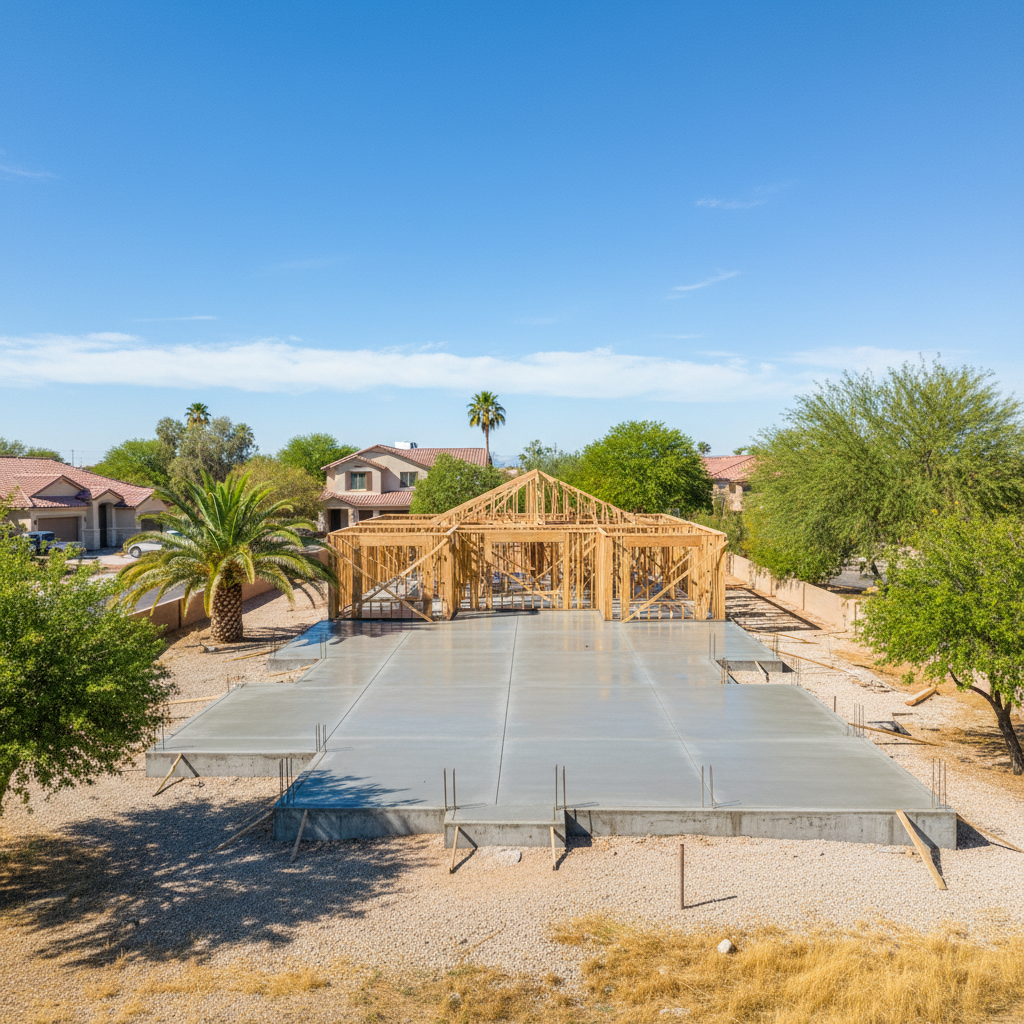
Alright, let's talk foundations. It's not the sexiest part of a house, I know, but it's probably the most important. Seriously. Here in Avondale, with our unique soil and climate, a solid concrete foundation isn't just a good idea; it's absolutely critical for your home's long-term health and value.
Why Avondale Foundations Are Different
You might think concrete is concrete, right? Pour it, let it dry, done. Not so fast, especially here in the Valley. We've got a few things working against us that demand a different approach than, say, up in Flagstaff or out in California.
Expansive Clay Soils: This is a big one. A lot of Avondale, particularly in areas like Coldwater Springs or the newer developments near Loop 303, sits on expansive clay soils. What does that mean? These soils swell when they get wet and shrink when they dry out. Imagine your house sitting on a constantly shifting bed. Without the right foundation design and proper compaction, this movement can lead to cracks in your slab, walls, and even structural damage over time. We're talking about differential settlement, and it's a headache you absolutely want to avoid.
Extreme Temperature Swings: Our summers are brutal. And while winters are mild, we still see significant temperature fluctuations throughout the year. Concrete expands and contracts with temperature changes. If your foundation isn't designed to handle these stresses, you're setting yourself up for trouble.
Water Management: Monsoons hit hard and fast. Proper drainage around your foundation isn't just about keeping your yard dry; it's about protecting that concrete base from excessive moisture. That moisture can activate those expansive soils we just talked about. I've seen too many homes where poor grading caused water to pool, leading to foundation issues that could've been prevented.
What Goes Into a Good Foundation Here?
It's more than just pouring a slab. A proper foundation starts long before the concrete truck even shows up.
First, you need a thorough soil analysis. Any reputable builder or contractor, including us at Avondale Concrete Solutions, will insist on this. Knowing what kind of soil you're building on dictates the foundation type and design. Sometimes, you'll need a post-tensioned slab. This uses high-strength steel cables threaded through the concrete, then tightened after the concrete cures. It creates compression within the slab, making it incredibly strong and resistant to cracking from soil movement. Other times, a conventional slab-on-grade with proper rebar reinforcement and thickened edges might do the trick, but it always depends on those soil reports.
Then there's the preparation. We're talking about proper excavation, grading, and compaction. You can't just pour concrete over loose dirt. That ground needs to be stable and uniformly compacted to support the weight of the structure above it. We're talking about achieving specific compaction percentages, not just driving a roller over it once.
Reinforcement is another key. Rebar, or steel reinforcing bars, are essential. They give concrete its tensile strength, helping it resist pulling forces. Without enough rebar, or if it's not placed correctly, your slab is much more prone to cracking.
Why Local Expertise Matters
You wouldn't hire a snowplow driver to fix your AC, right? Same goes for foundations. You need someone who understands Avondale's specific challenges. A contractor from a different state or even a different part of Arizona might not be familiar with our unique soil conditions or the local building codes that are designed to address them.
We've been working on foundations and concrete projects all over Avondale for years. We've seen what works and, more importantly, what doesn't. We know the common pitfalls and how to avoid them. We're familiar with the local inspectors and what they look for. When you're talking about the very base of your home, you don't want to leave it to chance or to someone who's just guessing.
If you're planning a new home, an addition, or even a large detached garage, don't skimp on the foundation. It's the one part of your house that's nearly impossible to fix properly or affordably once it's built wrong. Invest in quality work upfront, and you'll save yourself a world of headaches and expense down the road. That's worth every penny when it comes to your home's foundation.