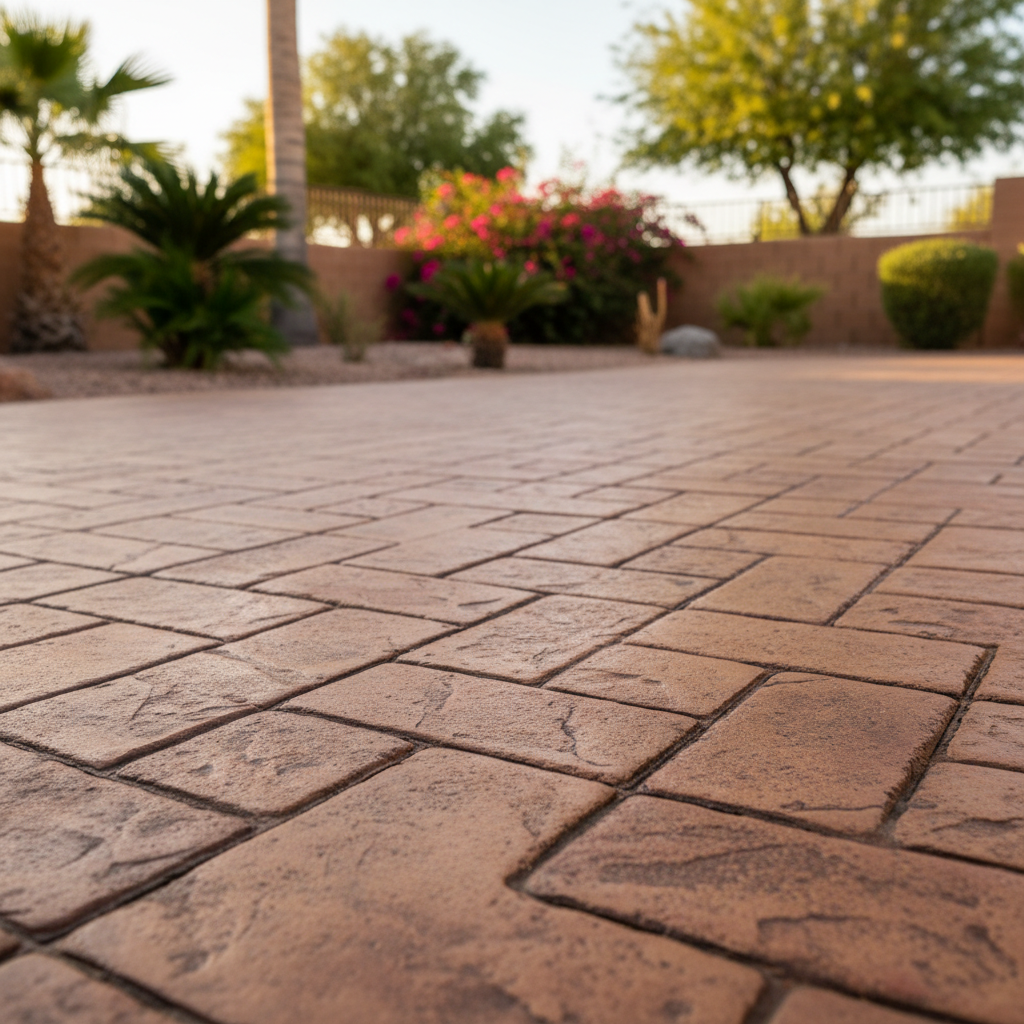
Alright, let's talk decorative concrete for your home here in Avondale. You've got that plain gray slab, maybe a patio, a walkway, or even your garage floor, and you're thinking, "Man, I could really make this pop." And you're right, you absolutely can. Decorative concrete isn't just about making things pretty; it also adds value and durability, especially with our Arizona sun beating down on everything. But before you jump in, you need to know what you're getting into, what you can tackle yourself, and when it's time to pick up the phone and call a local pro like us at Avondale Concrete Solutions.
Before You Start: Planning Your Decorative Concrete Project
First things first, what kind of look are you after? Decorative concrete covers a lot of ground. We're talking about things like staining, overlays, and even stenciling. Each one gives you a different vibe and has different requirements, obviously.
What Can You DIY?
- Staining: This is probably the most popular DIY decorative concrete option out there. You can use acid-based or water-based stains. Acid stains react with the concrete's minerals, creating a translucent, mottled look—kind of like natural stone. Water-based stains, on the other hand, offer a wider range of colors and are generally easier to apply and clean up. Just remember, with water-based, the color will be more consistent since it doesn't react with the concrete itself. You'll need to clean and prep the surface thoroughly first, maybe even etch it if water doesn't absorb well. Then you spray or roll the stain on, often in circular or erratic motions to avoid lines. Don't forget to seal it afterward to protect the color and surface!
- Stenciling: If you've got a steady hand and a good eye, stenciling can add some really cool patterns to an existing concrete surface. You'll need a good quality stencil, outdoor concrete paint, and a sealer. For textured concrete, a stenciling brush usually works better than a roller to get into all those nooks and crannies. Spray paint can also be a game-changer for stenciling, especially with spray adhesive to keep the stencil in place.
- Epoxy Coatings (for garages): While some epoxy systems are definitely pro-level, you can find DIY kits for garage floors. These can make your garage floor tough, easy to clean, and look a lot better than bare concrete. You'll still need to do some serious prep, like cleaning and possibly grinding the concrete, especially if you have cracks.
When to Call a Pro
Look, some jobs are just too big or too complex for a DIY weekend warrior, especially here in our Avondale climate. If you're looking at:
- Stamped Concrete: This means pressing patterns into fresh concrete to mimic stone, brick, or wood. It requires precise timing and specialized equipment, and getting it wrong means a huge headache. The heat here in Avondale means concrete sets fast, so pros know how to manage that.
- Concrete Overlays or Resurfacing: If your existing concrete is cracked, discolored, or damaged, an overlay can give it a fresh start. This isn't just slapping on some new material; it requires proper surface assessment, preparation, and application to ensure it bonds correctly and lasts.
- Polished Concrete: Turning a plain slab into a smooth, high-gloss surface takes specialized grinding and polishing equipment.
- Any large-scale project: Driveways, big patios, or anything that involves pouring new concrete. Our local caliche soil and extreme heat mean you need pros who understand how to prepare the base and cure the concrete properly to prevent cracking and shifting.
During the Project: What to Watch Out For
Whether you're DIYing or watching the pros, a few things are critical.
Weather Matters, Especially Here
You know how hot it gets in Avondale. That's a huge factor for concrete. Ideally, concrete likes to cure in temperatures between 50°F and 70°F. Pouring in our summer heat can make the concrete dry too fast, leading to cracks and a weaker surface. That's why we often schedule pours for early morning, before 6 AM, to beat the heat. If you're staining or sealing, you still want to avoid direct, intense sun and extreme temperatures for the best results and proper drying.
Prep is Everything
Seriously, 90% of a good decorative concrete job is in the preparation. This means thoroughly cleaning the surface, removing old sealers or coatings, and making sure it's ready to accept the new material. For staining, if your concrete is too smooth, it might need etching so the stain can penetrate. Don't skimp on this step, or your beautiful new finish won't last.
After the Project: Keeping It Looking Great
You've put in the work (or paid someone good to do it), now you want it to last.
Sealing is Non-Negotiable
Every decorative concrete surface needs a good sealer. This protects it from UV rays, stains, and general wear and tear. In Avondale, with our intense sun, a quality sealer is crucial to prevent fading and cracking. It also makes cleaning a lot easier.
Maintenance is Key
Decorative concrete is generally low maintenance, but it's not *no* maintenance. You'll want to clean it periodically and re-seal it every few years. The exact frequency depends on the type of decorative finish and how much traffic it gets. For example, a stained concrete driveway will need regular cleaning and re-sealing to maintain its appearance. Keep an eye out for any small cracks or issues and address them quickly to prevent bigger problems down the road.
So there you have it. Decorative concrete can really transform your Avondale home. Just be realistic about what you can do yourself and don't hesitate to call in the experts at Avondale Concrete Solutions when the job calls for it. We're here to help you get a durable, beautiful finish that stands up to our desert life.