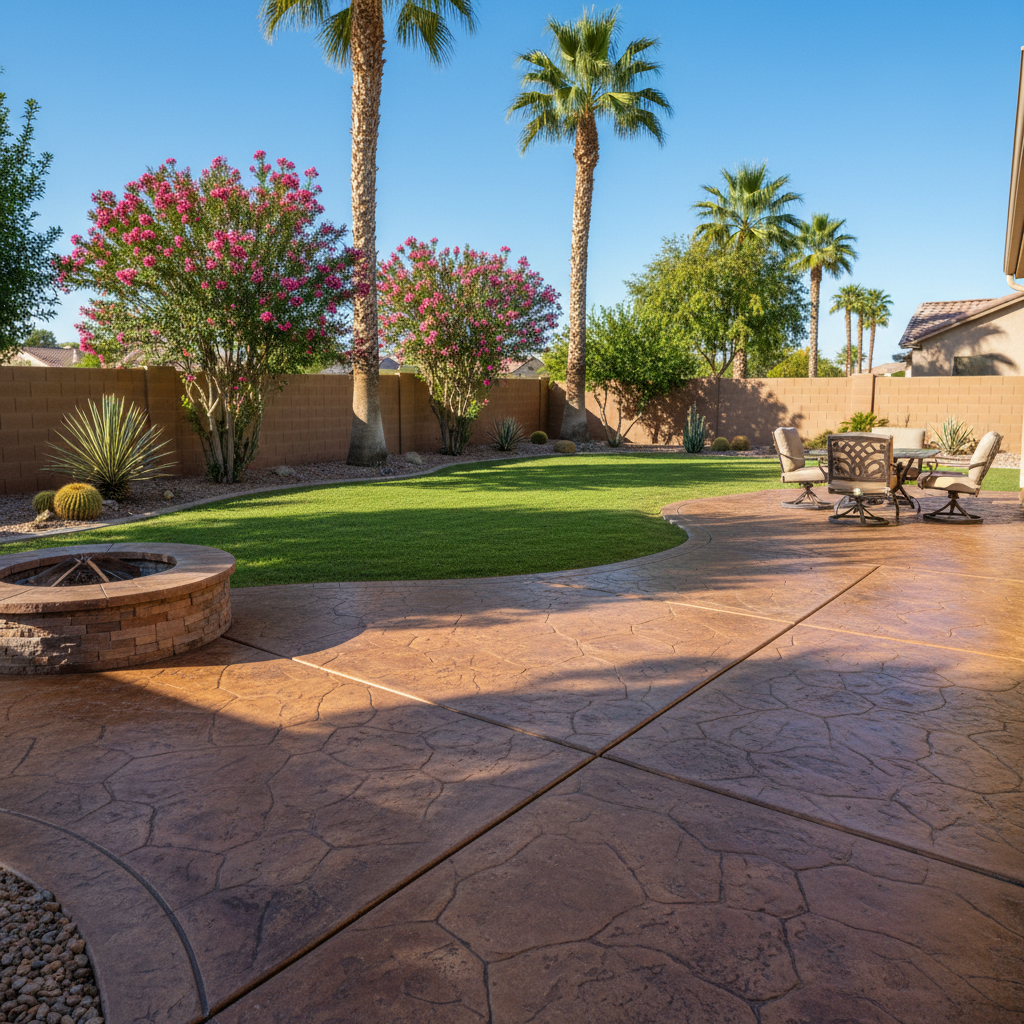
Thinking about a decorative concrete project for your place? Awesome! It can totally change how a space feels, boost its curb appeal, and even add value to your property. But let me tell you, I've watched plenty of folks right here in Avondale stumble into some pretty common—and frankly, expensive—traps when they're trying to get this kind of work done. You definitely don't want to be one of them.
You're putting your hard-earned cash into this, so naturally, you want it done right. Here are the biggest screw-ups I see homeowners make, and how you can steer clear of them.
Mistake #1: Only Looking at the Cheapest Price Tag
This one's probably the most frequent offender. Everybody wants a good deal, I get it. But when it comes to decorative concrete, the lowest bid almost never turns out to be the best deal in the long run. Why not? Because good materials, skilled labor, and proper groundwork all cost money. A super low bid usually means someone's cutting corners somewhere.
They might use cheaper sealers that just won't stand up to our brutal Avondale sun, or they could skimp on the base prep—which, by the way, is absolutely critical for stopping cracks down the road. You might save a few hundred bucks up front, sure, but you'll end up paying way more for repairs or even a full redo in just a couple of years. Always get a few bids, but don't just grab the cheapest one. Ask *why* one quote is so much lower or higher than the others. Any reputable contractor should be able to explain their pricing clearly.
Mistake #2: Not Grasping How Much Upkeep It Needs
Decorative concrete—whether it’s stamped, stained, or polished—isn't something you can just "set and forget." It needs a little TLC to keep it looking sharp, especially out here in the desert. I’ve had people call me, pretty annoyed that their stamped patio isn't as bright as it used to be, and when I ask about sealing, they just stare blankly.
Most decorative concrete surfaces need a fresh seal every few years, sometimes even annually, depending on how much foot traffic they get and how much sun they see. If you’re not ready for that, you’re going to be disappointed. Before you commit, ask your contractor about the specific maintenance schedule for the finish you’re considering. What kind of cleaner should you use? How often does it need sealing? And what about protecting it from those monsoon rains or our extreme heat?
Mistake #3: Skipping Out on Checking References or Past Projects
This seems like a no-brainer, right? But you'd be surprised how many people just go with the first contractor who gives them a decent quote and seems friendly enough. You wouldn't buy a car without taking it for a spin, would you? Think of checking references and looking at past projects as your contractor's "test drive."
Ask for pictures of their previous decorative concrete jobs. Even better, ask if you can swing by a project they finished a year or two ago. This lets you see how their work actually holds up over time. If they hesitate or can't show you anything, that’s a huge red flag. A good contractor, like us at Avondale Concrete Solutions, is proud of what they do and happy to show it off.
Mistake #4: Ignoring the Finer Points in the Contract
A handshake and a verbal agreement? No way. Not for a big project like decorative concrete. You absolutely need a detailed, written contract. This isn't about not trusting someone; it's about making sure everyone's on the same page and protecting both sides, plain and simple.
Your contract should clearly spell out:
- The exact scope of work (which areas, what kind of finish, colors, patterns).
- Materials they'll use (specific sealer, concrete mix, etc.).
- Project timeline, including when they'll start and roughly when they'll finish.
- The total cost and how payments will be scheduled.
- Warranty information.
- What happens if there are delays or changes to the plan.
Without this, if something goes sideways, you’ve got nothing to fall back on. I’ve seen arguments over color, pattern, and even the size of the area to be covered, all because the details weren't put down in writing.
Mistake #5: Having Wildly Unrealistic Ideas About Color and Texture
Decorative concrete isn't like painting a wall, you know? The final color and texture can vary a bit from those little samples. This is especially true with stains, which react differently to every concrete pour. The soil here in Avondale, particularly around the Estrella Mountain Ranch area, sometimes has unique mineral compositions that can subtly affect how certain stains cure, for instance.
Your contractor should definitely give you samples, but understand that the finished product over a large area might look slightly different than a small swatch. Talk through these possible variations. Ask about how the light will hit the color throughout the day. Don't expect perfect, factory-produced uniformity; part of what makes decorative concrete so beautiful is its unique, handcrafted nature.
By sidestepping these common blunders, you'll be much better prepared to get a decorative concrete project you'll truly love for years to come. Do your homework, ask the right questions, and don't be afraid to just walk away if something feels off.