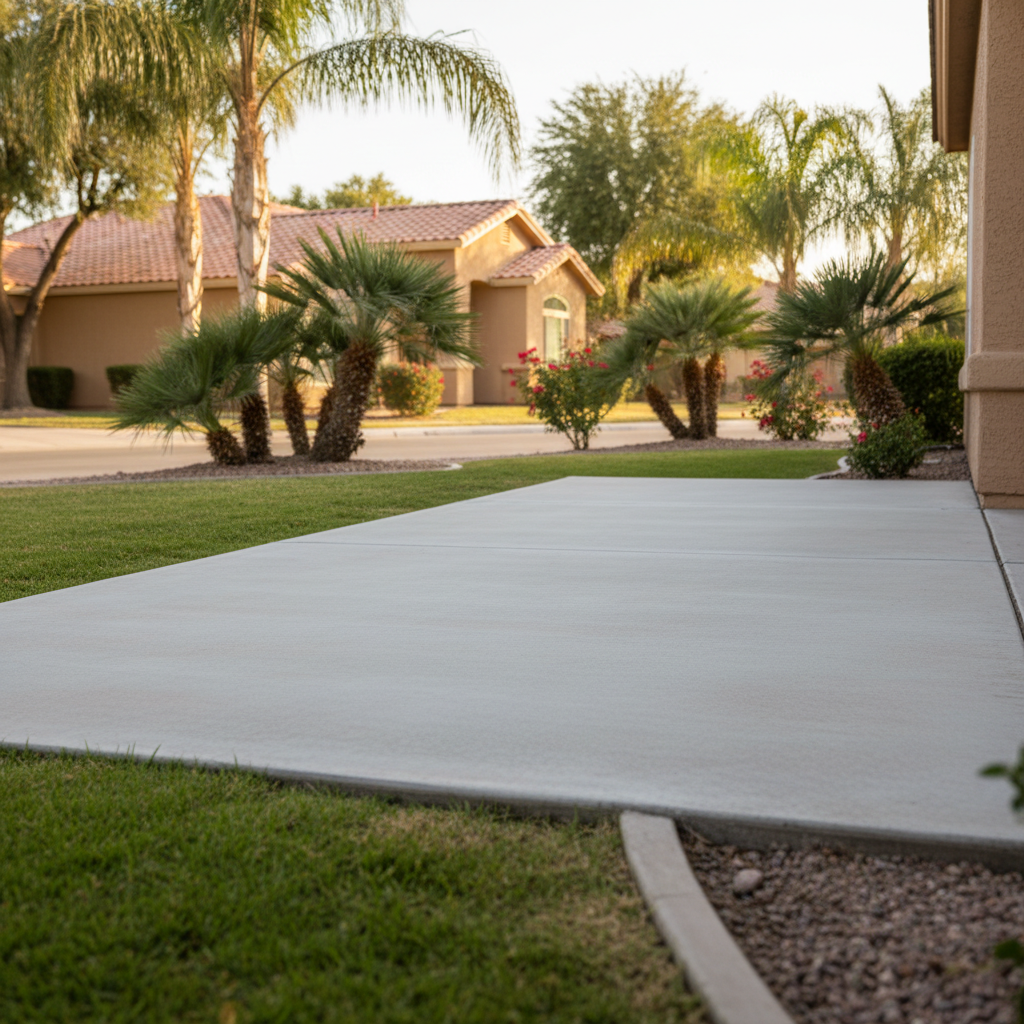
So, you've got new concrete, or maybe you're just wondering how to best care for the stuff you've already got. It's a solid investment, literally, but it ain't bulletproof. Especially not out here in Avondale, where the sun bakes everything and the monsoon season can be a real wild card, you know?
I've seen a lot of concrete come and go in this town, from the newer developments near Estrella Mountain Regional Park to the older homes closer to the I-10. The truth is, good concrete can last a lifetime, but it needs a little love. Neglect it, and you'll be looking at cracks, spalling, and a whole lot of headache sooner than you'd think.
Making Your Concrete Last Longer
The biggest thing you can do to make your concrete last is proper sealing. This isn't just a one-and-done deal, either. Think of it like sunscreen for your concrete. Out here in Arizona, the UV rays are brutal, and they'll break down the binder in your concrete over time, making it weaker and more porous. A good quality sealer protects against that, and it also helps repel water, oil, and other stains.
For most homes, I recommend resealing every 2-3 years. If it's a high-traffic area, like a commercial parking lot or a driveway that sees a lot of heavy vehicles, you might want to do it annually. You'll know it's time when water stops beading up on the surface and starts soaking in. Don't skimp on the sealer; it's a small cost now that saves you big money down the road.
Another big one is drainage. Water is concrete's enemy if it's sitting there. Make sure your landscape grading directs water away from your concrete slabs, not towards them. We get those heavy, fast downpours during monsoon season, and if water pools up against your foundation or driveway, it can undermine the sub-base, leading to settlement and cracking.
Regular Upkeep: What You Should Do
Keeping your concrete clean is more than just looking good; it's part of its long-term health. Dirt, dust, and debris can hold moisture against the surface, encouraging mold and mildew growth, which can eventually degrade the concrete. Plus, organic matter can leave stains that are tougher to remove later.
- Sweeping and Blowing: Just a simple sweep or using a leaf blower regularly keeps surface debris off. It's easy, and it makes a difference.
- Washing: For general cleaning, a hose with a good spray nozzle and a stiff brush works wonders. For tougher grime, a mild detergent and water solution is usually enough. Avoid harsh chemicals unless they're specifically designed for concrete, as they can strip sealers or damage the surface.
- Pressure Washing: You can pressure wash, but be careful. Too much pressure, especially with a narrow tip, can etch or damage the surface, particularly if the concrete is older or not properly sealed. Keep the nozzle moving and use a wider spray pattern.
- Stain Removal: Tackle spills quickly. Oil, grease, rust, and even leaves can leave stubborn marks if left too long. There are specific concrete cleaners for different types of stains. For oil, kitty litter or sawdust can absorb a lot of it before you even clean.
Also, watch out for heavy loads. Don't park heavy equipment on your residential driveway for extended periods if it wasn't designed for it. Overloading can cause stress fractures.
Warning Signs You Shouldn't Ignore
Your concrete will tell you when it's unhappy. You just gotta know what to look for.
- Cracks: Small hairline cracks are often normal, especially with our temperature swings here in Avondale. But if they start widening, getting longer, or if you see significant spiderwebbing, that's a red flag. Cracks that are wider than a credit card or show vertical displacement (one side higher than the other) are definitely a concern.
- Spalling or Flaking: This is when the surface of the concrete starts to chip, peel, or flake off. It often looks like the top layer is coming apart. This can be caused by freeze-thaw cycles (though less common here, it can happen on rare cold nights if water is trapped), improper finishing, or just general surface degradation over time.
- Discoloration or Stains: Beyond typical dirt, if you see persistent dark patches, green growth, or rust stains that won't come off, it could indicate moisture problems, rebar corrosion, or something else going on beneath the surface.
- Settlement or Unevenness: If a slab starts to sink, or you notice a significant difference in height between adjacent slabs, that's a sign of a problem with the sub-base. This is common in areas with expansive clay soils, like some parts of the West Valley, where soil can swell and shrink with moisture changes.
- Pitting: Small holes or craters on the surface can be from aggregate popping out, or from air bubbles during the pour. A few are usually fine, but widespread pitting indicates a weaker surface.
When to Call a Professional
Look, I'm all for DIY, but some things are best left to the pros. If you see any of those major warning signs – significant cracking, spalling, or settlement – it's time to call someone like us at Avondale Concrete Solutions. Trying to fix a structural issue yourself can often make it worse or just put a band-aid on a bigger problem.
We can assess the situation, figure out the root cause, and recommend the right solution, whether it's crack repair, slab jacking, or even replacement if necessary. Catching these issues early can save you a ton of money and prevent minor problems from turning into major hazards. Don't wait until someone trips or your foundation is compromised. Give us a call when you're not sure, and we'll come take a look.