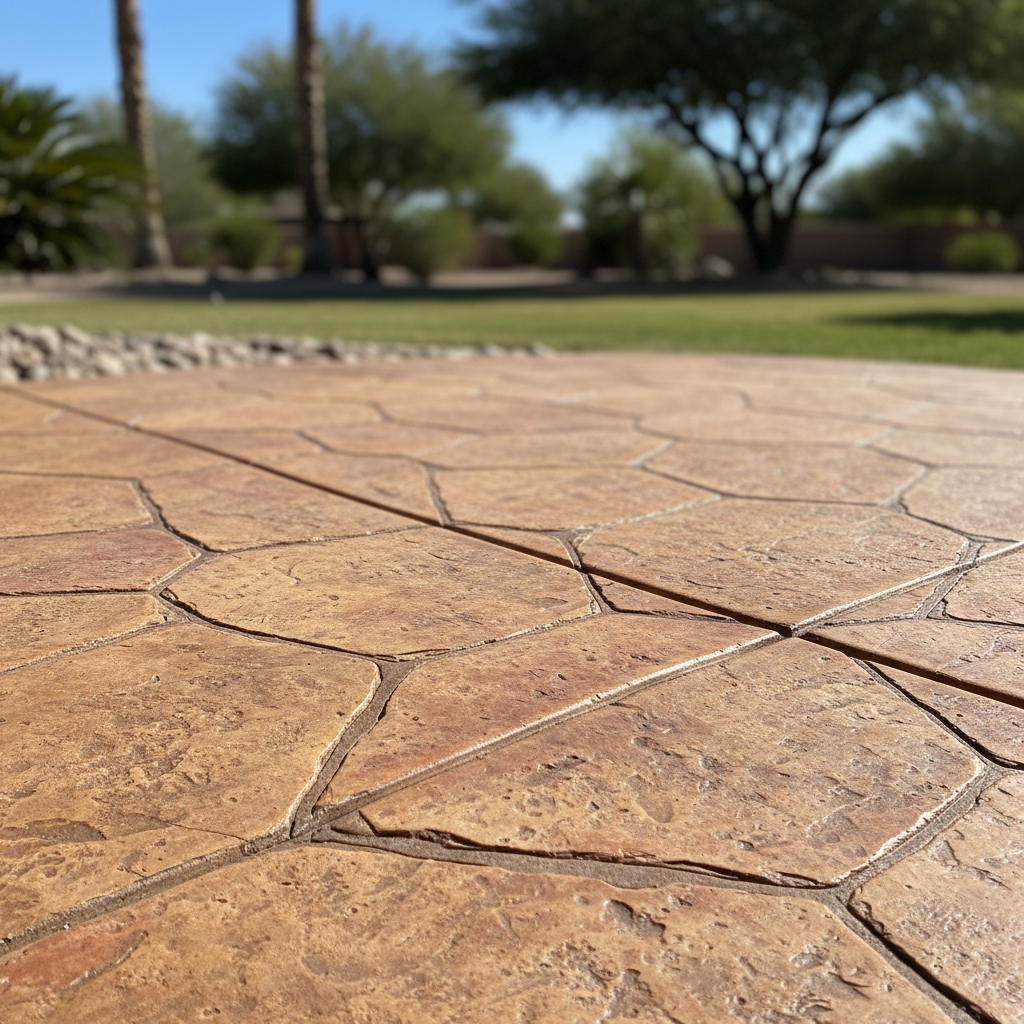
Want to upgrade your backyard patio or front walkway without settling for plain gray slabs? Decorative concrete is a solid way to boost your home curb appeal, but you have got to plan it right. Before the trucks roll up, while the work is happening, and how to keep it looking sharp afterward are all important steps for Avondale Concrete Solutions projects in Avondale, AZ.
Before You Pour: Planning and Prep
Getting ready for a decorative concrete project takes more than just picking out a pattern. You have got to look at your ground conditions. Here in Avondale, we deal with alkaline soils and sometimes dense caliche layers underneath that yard of yours. If you skip proper site prep and compaction, your new decorative surface will crack when the ground shifts.
- Call 811 to mark underground utility lines before touching a shovel.
- Check your HOA guidelines if you live in communities like Coldwater Springs or Garden Lakes because they often have rules about colors and textures.
- Map out your drainage so water flows away from your foundation during those heavy monsoon downpours.
DIY vs. Calling a Pro
Pouring standard concrete is hard enough, but decorative finishes like stamping, acid staining, or exposed aggregate leave zero room for hesitation.
You can definitely handle power-washing an old slab, applying a clear topical sealer, or pulling up landscape borders yourself. But when it comes to pouring a fresh decorative patio, you will want to call in Avondale Concrete Solutions. Concrete sets very fast under our dry desert air and intense sun to learn on the fly. If you misjudge the timing by twenty minutes, you will lose the window to stamp the pattern cleanly.
During the Project: What to Expect
Once work starts, things move fast. Professional crews usually show up before the sun is fully up during the summer months to beat the brutal heat. Forms go in, sub-base gets compacted, and the truck arrives. If you are doing an integrally colored pour with a stamped slate pattern, you will see workers applying release agents and stamping mats sequentially across the fresh mud.
Do not panic if the color looks too dark or milky at first. Stamped concrete goes through a curing phase where liquid releases and sealers dry out over a few days. Just stay off the surface and keep pets locked inside.
After the Project: Curing and Upkeep
The pour is done, but your job is not over yet. Avondale low humidity and dry winds can suck the moisture right out of fresh concrete, leading to surface shrinkage cracks if it dries too quickly. Keep the slab damp with a light misting for the first few days, or make sure your contractor applies a proper curing compound.
Once it is fully cured, maintenance is very straightforward. Sweep away the desert dust regularly and hose it down when needed. Plan on rolling on a fresh coat of high-quality concrete sealer every couple of years. That barrier protects the colors from fading under the harsh Arizona sun and keeps stains from soaking into the porous texture.