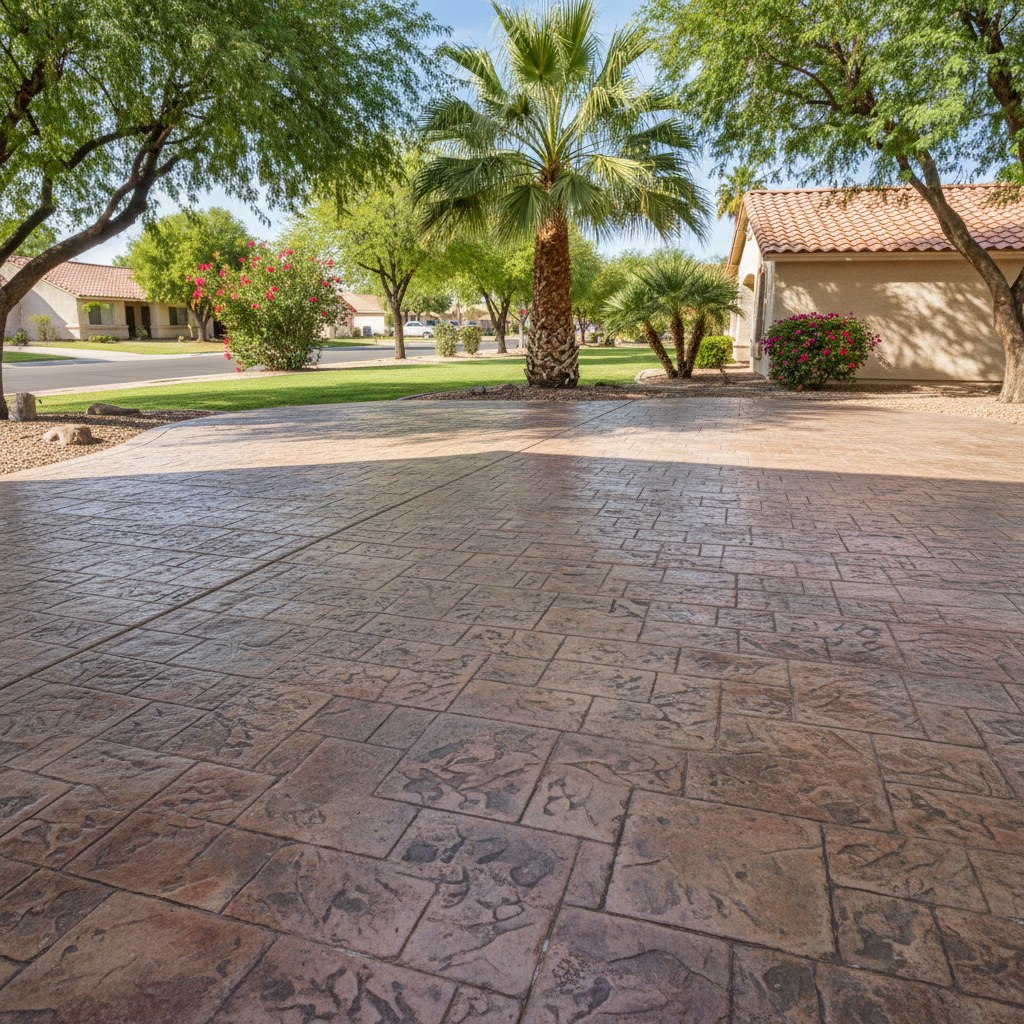
So, you've got stamped concrete. Maybe it's your patio, your driveway, or a walkway. It looks fantastic, right? That's because it's designed to mimic natural stone, brick, or wood, but with the durability of concrete. But here in Avondale, with our intense sun and monsoon rains, 'durable' doesn't mean 'maintenance-free.' You've got to give it a little love to keep it looking its best and protect your investment.
Why Your Stamped Concrete Needs Attention
Think about it for a second: your stamped concrete is constantly out in the elements. The relentless Arizona sun beats down on it, drying out the sealer and fading the color over time. Then you get those sudden monsoon downpours that can wash away loose dirt and even challenge the surface's integrity if you don't maintain it right. We also deal with dust, dirt, and even the occasional oil drip from a car. All these things take a toll. If you don't take care of it, that beautiful pattern and color you paid for will start to look dull, faded, and eventually, it could even crack or spall. Nobody wants that, do they?
The Basics: Regular Maintenance You Can Do
Good news is, most of the regular upkeep isn't rocket science. You can handle a lot of it yourself. Here’s what I tell folks:
- Keep it Clean: This is probably the easiest thing you can do. Sweep off leaves, dirt, and debris regularly. For a deeper clean, grab a garden hose with a spray nozzle. If you've got stubborn spots, a mild detergent and a soft-bristle brush will usually do the trick. Just make sure it's a non-abrasive cleaner. You definitely don't want to strip the sealer or etch the concrete.
- Watch for Stains: Oil, grease, rust, pet messes – these need to be cleaned up as soon as possible. The longer they sit, especially in our heat, the harder they are to remove. For oil, kitty litter or sawdust can help absorb it before you scrub. For rust, there are specific rust removers, but always test in an inconspicuous spot first.
- Rinse After Cleaning: Always rinse thoroughly after using any cleaning solution. You don't want residue drying on your concrete, as it can leave streaks or even attract more dirt.
- Don't Use Harsh Chemicals: Bleach, acid-based cleaners, or anything abrasive is a big no-no. They can damage the sealer, fade the color, and even etch the concrete surface. Stick to the mild stuff.
The Key to Longevity: Sealing
This is where the rubber meets the road for stamped concrete in Avondale. The sealer is your concrete's protective shield. It's what gives it that vibrant, wet look and protects the color from UV rays, stains, and general wear and tear. Here in Arizona, because of the intense sun exposure, you're likely going to need to reseal more often than someone up north.
Generally, I recommend resealing every 2-3 years for most residential stamped concrete, especially if it's in direct sunlight all day, like a south-facing patio or a driveway. If it's under a covered patio or gets less sun, you might stretch it to 3-4 years. But keep an eye on it. If the color starts looking dull, or water no longer beads up on the surface, it's probably time. Before resealing, the concrete needs to be thoroughly cleaned and completely dry. It's a job that needs to be done right, or you'll end up with peeling or cloudy sealer, which is a headache to fix.
Warning Signs You Shouldn't Ignore
Your concrete will tell you when it's unhappy. Here are some things to watch out for:
- Fading Color: If your beautiful browns, grays, or reds are starting to look washed out, that's a clear sign the sealer is breaking down and the UV rays are getting to your pigment.
- Dull or Chalky Surface: Instead of that nice sheen, it looks flat and lifeless. Again, a sealer issue.
- Peeling or Flaking Sealer: This means the existing sealer is failing. It might have been applied too thick, over a dirty surface, or it's just old and worn out.
- Cracks: Small hairline cracks can sometimes appear, especially in areas with heavy foot traffic or if the ground underneath shifts. Larger cracks are more concerning.
- Spalling: This is when small pieces of the concrete surface break off. It can be caused by freeze-thaw cycles (not common here, but can happen with certain conditions) or, more likely in Avondale, by poor quality concrete, improper finishing, or damage from de-icing salts (which you shouldn't be using anyway!).
When to Call a Professional
Look, I'm all for DIY, but some things are best left to the pros. If you see any of those warning signs, especially cracking or spalling, it's time to give Avondale Concrete Solutions a call. Trying to fix significant cracks or extensive sealer failure yourself can often make things worse and cost you more in the long run.
Also, if you're not comfortable with the resealing process, or you've got a large area, it's smart to hire someone. We've got the right equipment, the right sealers for our climate, and the experience to get it done efficiently and correctly. We know the unique challenges our Avondale homes face, whether it's the expansive clay soils in some of the older neighborhoods or the intense summer heat that affects drying times.
Taking care of your stamped concrete isn't a huge chore, but it's important. A little bit of effort now will keep it looking fantastic for years and protect your home's curb appeal and value.